
- Role
- Lead UI/UX Designer · half Project Manager
- Team
- A two-person design team inside Givery’s product team; enterprise partners including Fujifilm and Konica Minolta
- Timeline
- Jan 2019 → launch Oct 2019 · at Givery until Mar 2020
- Tools
- User interviews · affinity mapping · IA · wireframes · Sketch/Figma prototypes
- Links
- athletix.run · article
TL;DR
Japan’s new-graduate recruiting is brutal on both sides: a mid-size company receives 1,000–3,000 applications for 15 positions, the acceptance rate through job-hunting platforms is about 0.7% per position, and the average search takes three months. Students lack confidence and clear goals; companies drown in identical forms. Athletics flips the model — companies host hackathons and coding challenges, students earn a score report that shows what they can actually do. I led the platform’s UX and UI and half of its product management, from hiring-manager interviews through personas, information architecture, wireframes, two rounds of user testing and the logo. It launched in October 2019.
What shipped
The work, before the story
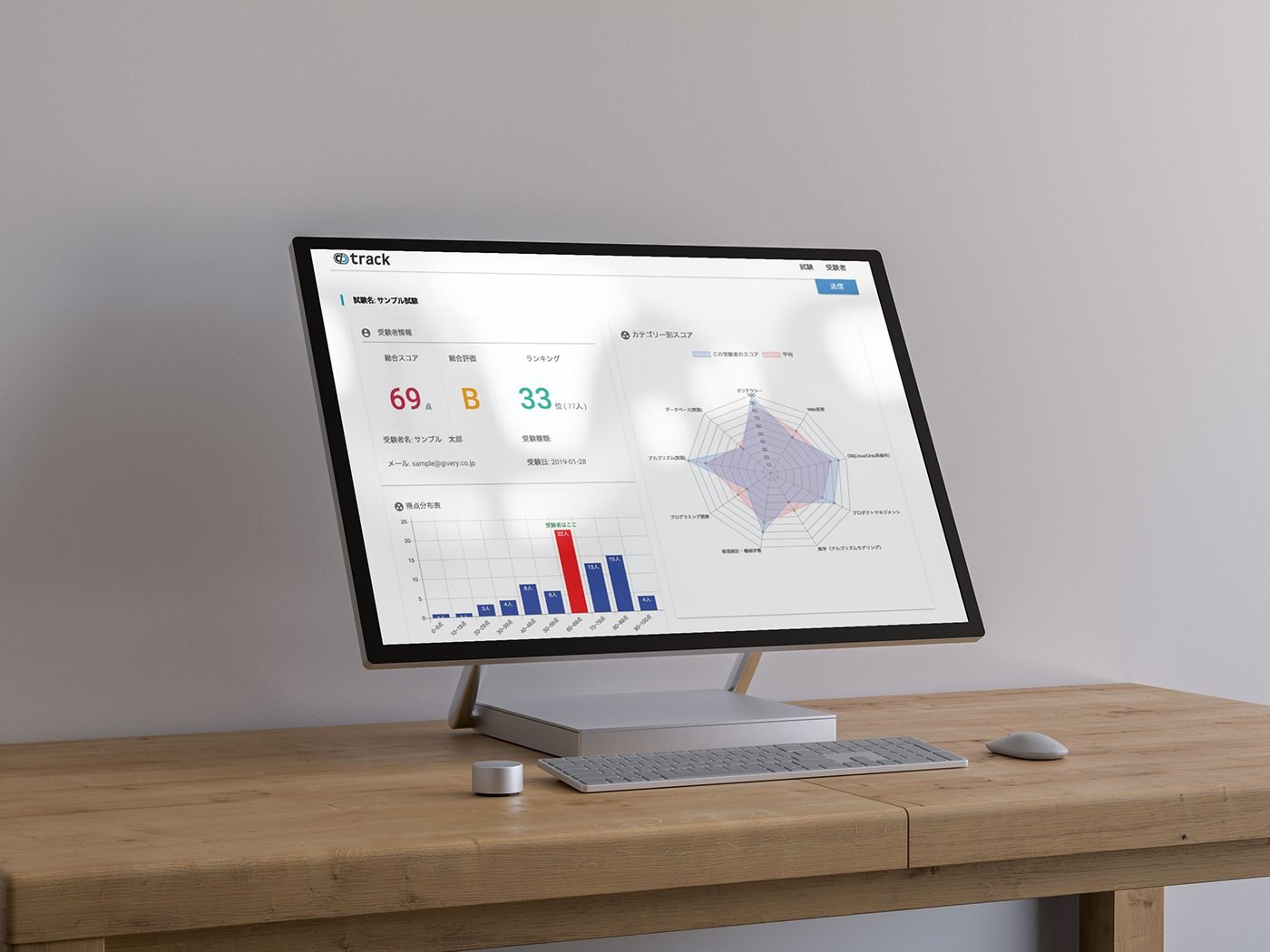
The score report
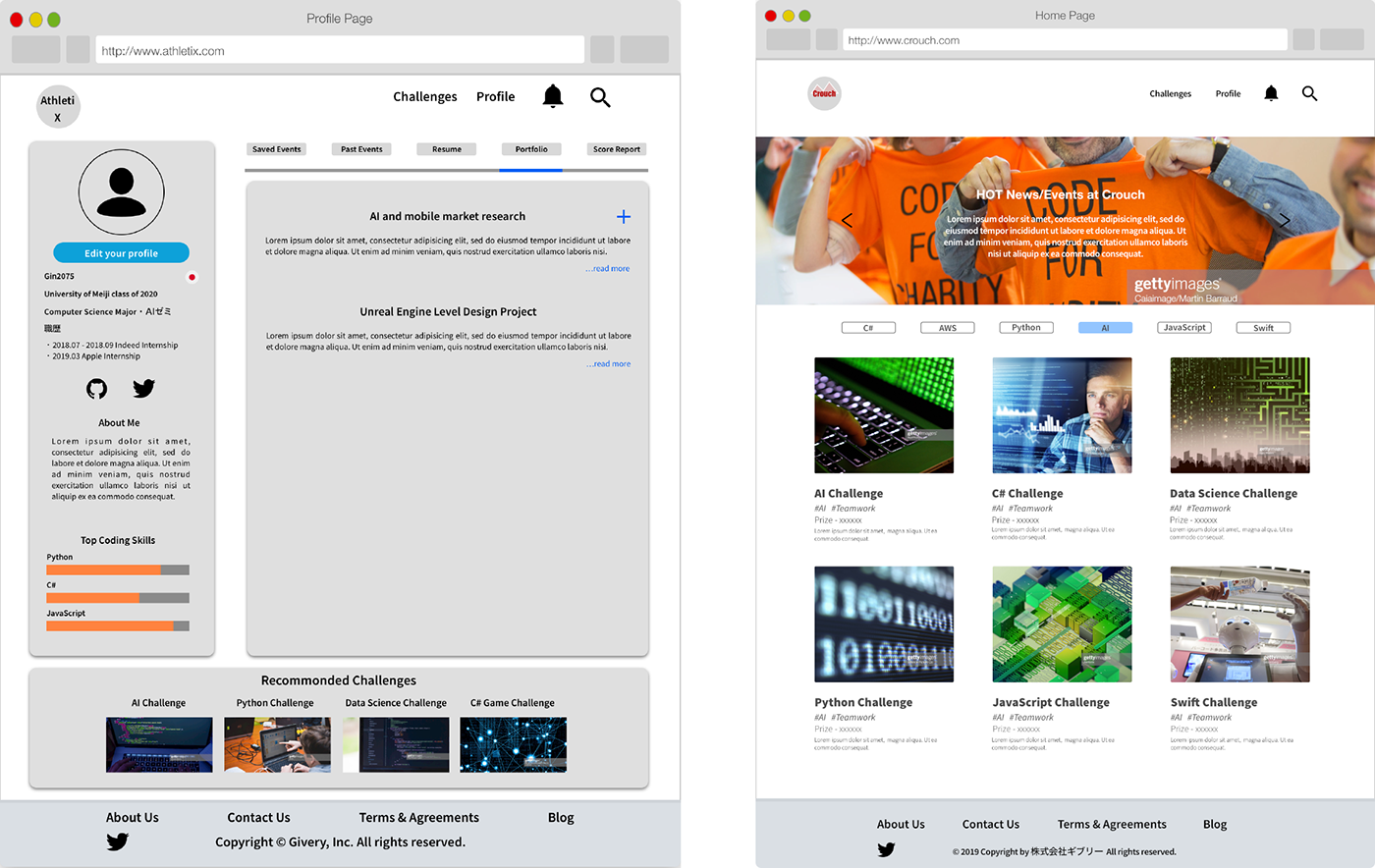
The single most important screen: a student’s challenge results, presented so that both the student and a hiring manager understand strengths at a glance.
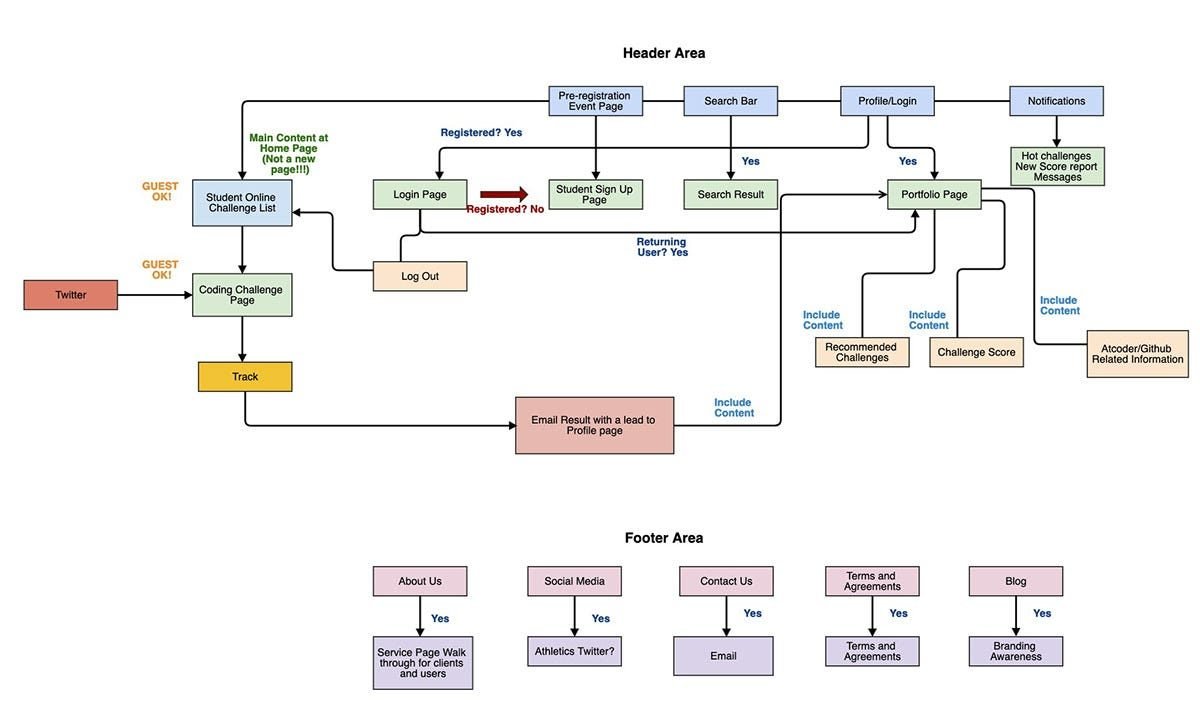
A flow built for three users
Students, companies and admins each got their own information architecture instead of one generic dashboard.
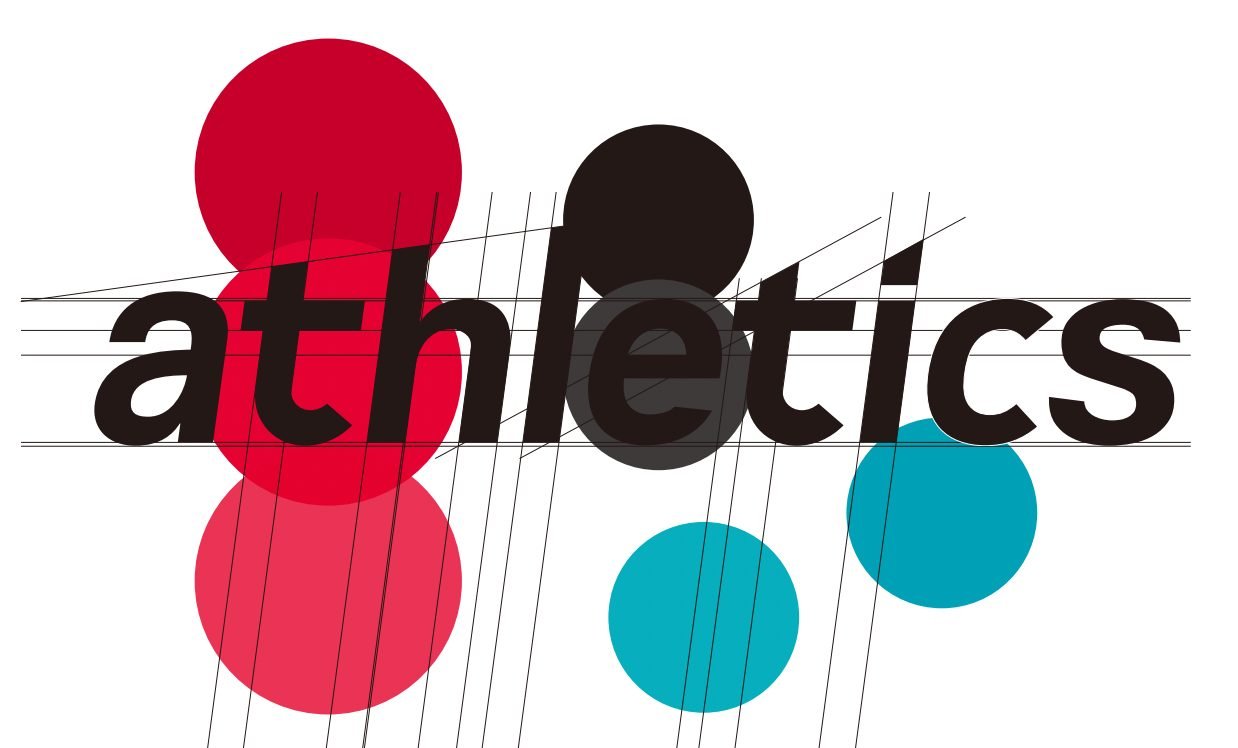
A brand for a platform, not a job board
The Athletics wordmark and identity — playful enough for students, credible enough for Fujifilm.
Context & problem
Too many platforms, too many forms, too few offers
Engineers were in demand — and still couldn’t get hired.
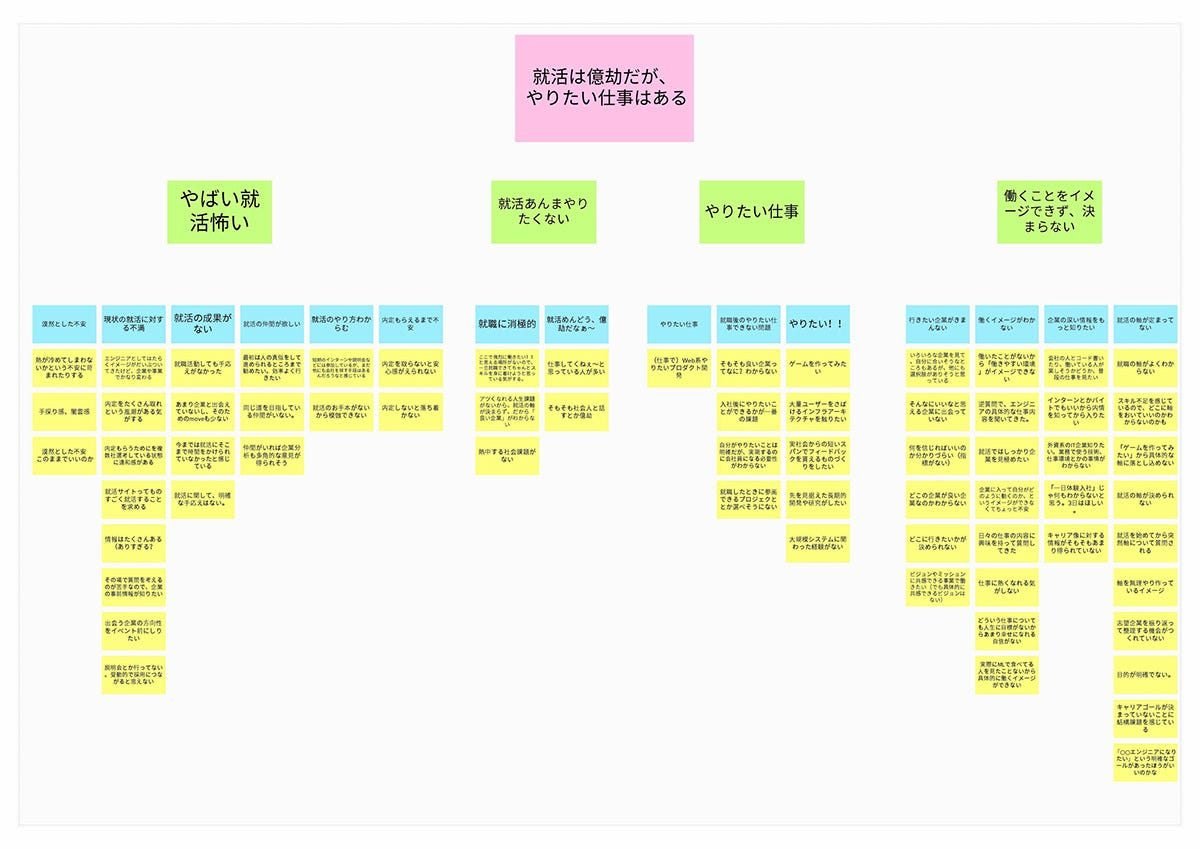
Japan’s recruitment industry is competitive and engineers are wanted, yet most engineering students had better odds through personal connections than through LinkedIn or Indeed. I interviewed hiring managers across companies and researched the pain points in their hiring process. Four conclusions shaped the product:
- Students lack confidence, or don’t have a clear career goal.
- One medium-size company receives 1,000–3,000 applications a year for 15 new-graduate positions.
- Too many platforms, too much time filling in forms — and a 0.7% acceptance rate per position.
- The average recruiting period for new graduates is three months. Could we shorten it and raise satisfaction on both sides?
Goals
What students needed, what companies needed
Show what I can do, not what my CV says — and get feedback I can learn from.
Screen thousands of applicants by demonstrated skill instead of by form.
Understand where I stand and what to aim for.
Shorten a three-month cycle and raise the quality of matches.
Meet companies like Fujifilm and Konica Minolta on my terms, at a hackathon.
Give traditional firms a digital hiring experience that appeals to new-graduate engineers.
Research
Interviews, personas and a manga
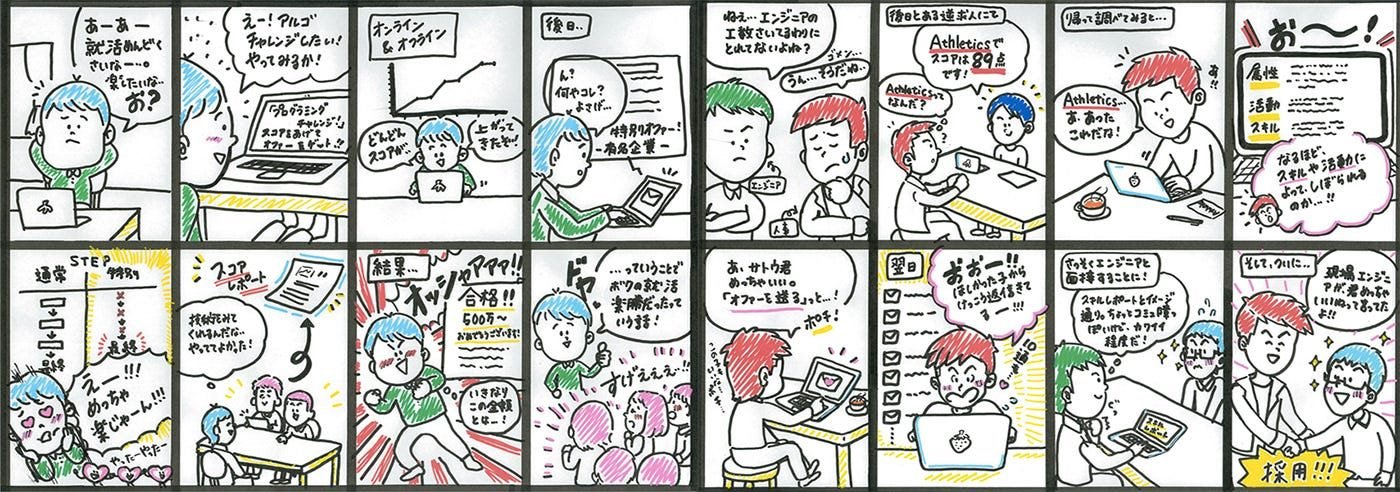
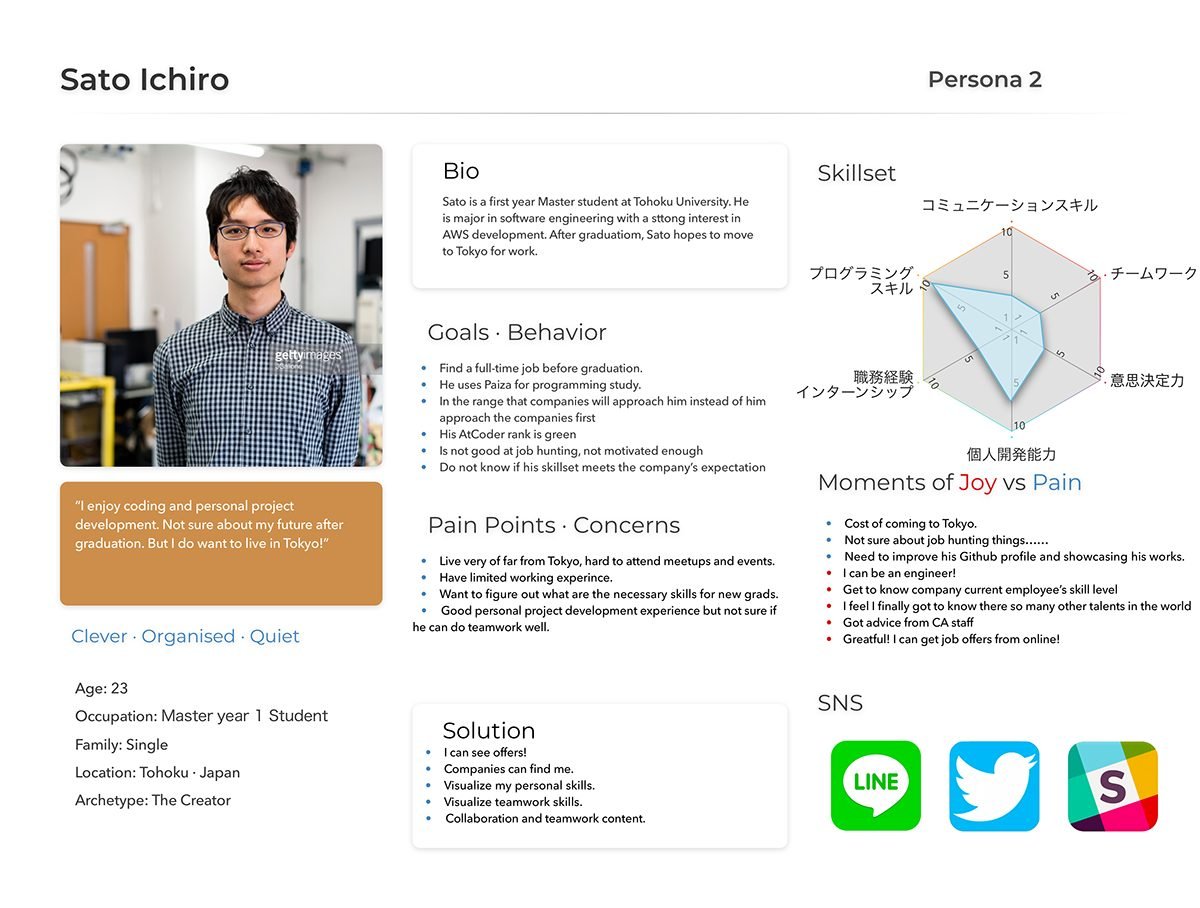
We ran user interviews with students and hiring managers, built personas and a user story — and, because a Japanese audience reads it instantly, drew the user journey as a manga.
Information architecture
Three users, three flows
Group discussions turned the findings into an information architecture with a separate flow for each user type — student, company and admin — rather than one generic dashboard. The student flow is centred on the challenge and its score report; the company flow on discovering and contacting candidates.
Wireframes & testing
The score report earned most of the iterations
Wireframes went into a first round of user testing. The score report — the moment a student sees how they did and what a company will see — turned out to be the most important experience on the platform, and the one we iterated most.
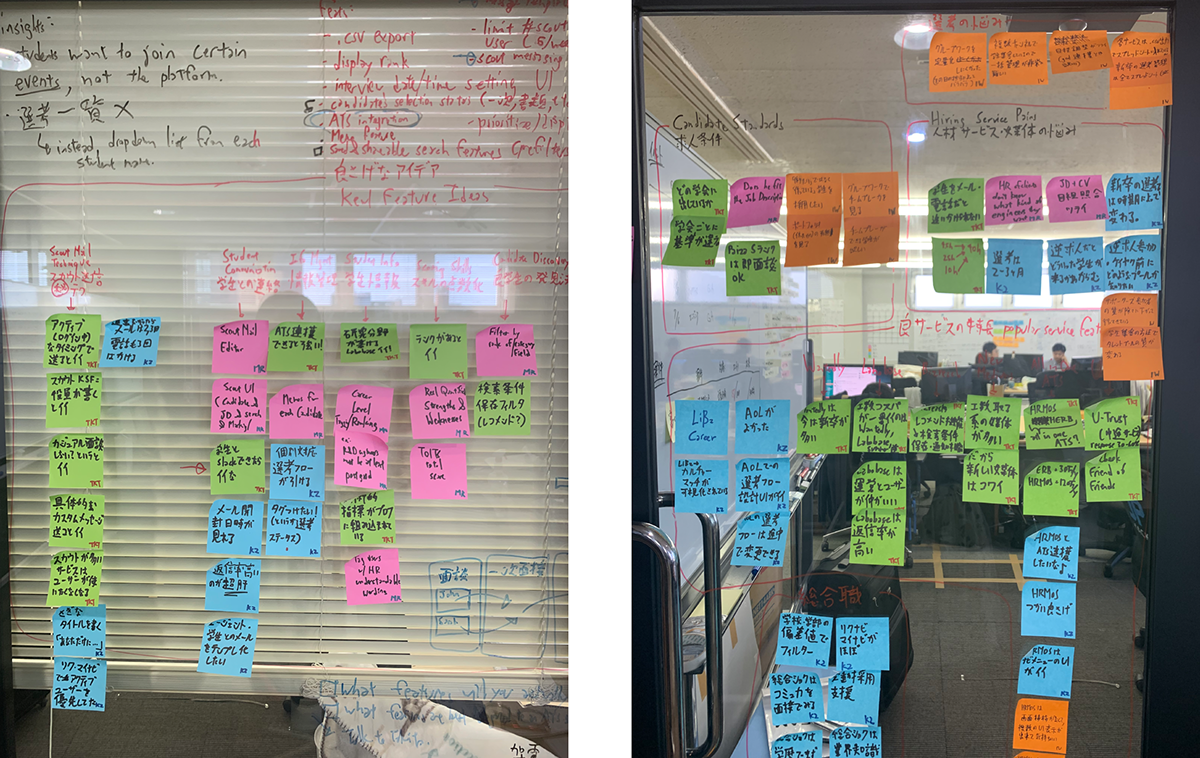
A second round of solution interviews validated the direction and produced a fresh affinity map of feedback, which we used to optimise the design before build.
The fun part
Outcome
Live in October 2019
Athletics launched at athletix.run in October 2019. Alongside the platform, a teammate and I finished the company’s product rebranding; together they raised website views and recruitment-site engagement, and average signed offers grew from 8 to 20 per month. We worked closely with large traditional firms such as Fujifilm and Konica Minolta to digitise their hiring and design a distinctive experience for new-graduate candidates.
Today athletix.run redirects to Track Job, Givery’s career platform for engineers — the hackathon-first idea lives on there as part of a bigger service.
Reflection
What I took with me
Design the proof, not the profile
The score report mattered more than any onboarding screen because it was the thing both sides actually wanted to see.
Research in the local idiom
A manga did more to align the team and stakeholders in Tokyo than any journey map would have.
Half PM is a real job
Owning scope and priorities alongside the design made me a better designer — and set up everything that came after.
What I’d do differently with AI today
- Synthesise the two interview rounds automatically and spend the time on solution design.
- Generate challenge questions and score-report explanations per role with an LLM, reviewed by hiring managers.
- Prototype the student flow as a working app in a week and test with real challenge data.
Curious to know more?